
Baby Chick & Duckling Setup Guide (Everything You Need for Beginners)
**This post may contain affiliate links , which means I may recieve a commison, at no cost to you, if you make a purchase through a link.**
If you’re bringing home baby chicks and ducklings for the first time, there are a few things you’ll want ready before they arrive.
Every spring, it’s almost impossible to walk into stores like Tractor Supply or Fleet Farm without falling in love with those tiny, fluffy chicks and ducklings. And before you know it… you’re thinking about bringing a few home.
I’ve been there too 🤍
When we started raising backyard chickens and ducks, I quickly realized that having the right brooder setup and supplies ready ahead of time makes everything so much easier (and way less stressful).
In this beginner-friendly guide, I’ll walk you through:
- everything you need before bringing chicks and ducklings home
- the best brooder setup for baby chicks and ducklings
- simple feeding basics for beginners
- mistakes to avoid when bringing home baby chicks and ducklings for the first time
So if you’re thinking about starting your first flock, this will help you feel confident, prepared, and ready from day one.
What to Know Before Bringing Home Baby Chicks and Ducklings
Before bringing home baby chicks and ducklings, taking a little time to plan ahead can make the whole experience smoother and a lot less overwhelming.
When we first started our backyard flock, I spent hours researching, watching videos, and trying to figure out exactly what we needed. And honestly, I’m so glad I did.
There’s a lot of information out there, but having a simple plan makes all the difference.
Here are a few important things to think about before bringing your chicks and ducklings home.
Research Your Breeds
Not all chickens or ducks are the same.
Some breeds are excellent egg layers. Others are known for being friendlier or more beginner-friendly.
Climate can also make a difference. Some birds handle cold winters better than others.
For our small backyard flock, we chose Buff Orpington chickens and Welsh Harlequin ducks.
We couldn’t be happier with that choice. Both breeds are incredibly docile and friendly.
They’ve also been reliable egg layers for our small homestead and have handled Wisconsin winters well with proper shelter.
Best Beginner Chicken & Duck Keeper Books
If you’re thinking about raising backyard chickens or ducks, these books were incredibly helpful in learning the basics before bringing our flock home.


Have a Coop Plan
While baby chicks and ducklings will start in a brooder indoors, they will eventually need a safe outdoor coop and run.
You don’t need your coop fully built yet—but you DO need a plan.
Make sure you’ve thought about:
- Where your coop will go
- Predator protection
- Ventilation
- Nesting boxes
- Space requirements
🐤We learned this the hard way… our birds were ready before our coop was 😅
Make Sure Your Brooder Is Ready
When you’re bringing home baby chicks and ducklings, having your brooder set up ahead of time makes everything so much easier.
Before they arrive, make sure you have:
- bedding
- a heat source
- food and water
- enough space for them to move around comfortably

Having everything ready ahead of time helps reduce stress for the birds and makes those first few days much smoother for you too.
Best Brooder Setup for Baby Chicks and Ducklings (Beginner Guide)
When bringing home baby chicks and ducklings, your brooder setup is one of the most important things to get right.
A brooder is simply a warm, safe space where your chicks and ducklings will live during their first few weeks.
It doesn’t need to be fancy—but it does need to be set up correctly before they arrive.
A lot of beginner setups work perfectly with simple things you may already have at home.
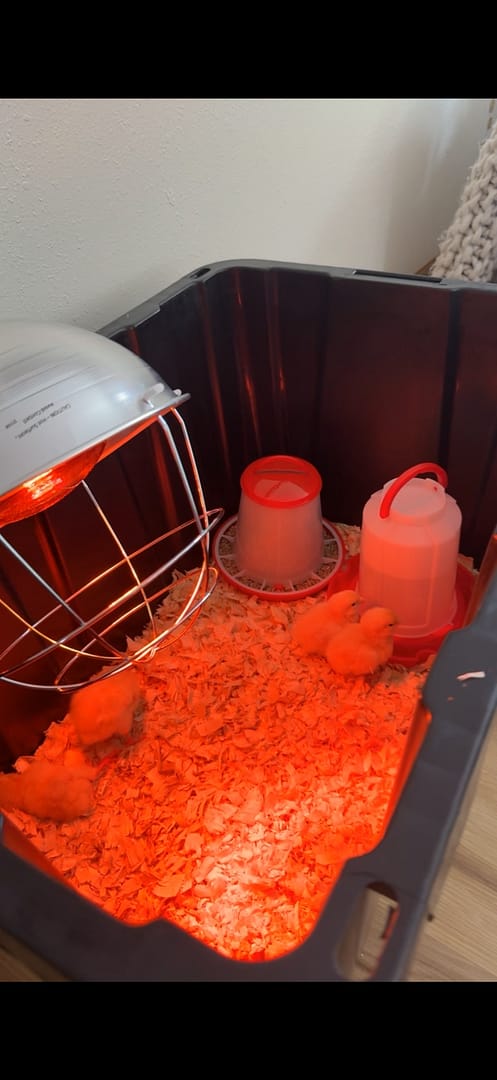
Simple tote setup
When we first started, we kept things simple and low-cost.
We used a large storage tote (around 27 gallons), and honestly—it worked perfectly for those first couple weeks.
🐤 If you don’t already have one, this is the exact style of tote we used → brooder tote
When we had to upgrade
As they started growing, though, we quickly realized how fast they outgrow that space—especially ducklings.
That’s when we upgraded to a playpen-style setup, which ended up being one of the best decisions. It gave them so much more room to move around, and we even used it outside once they had more feathers.
🐤This is the playpen style we switched to and loved → toddler playpen
We also tried one of those flexible, fold-out chicken pens (kind of like a pop-up design), which worked really well in the beginning too.
🐤 Here’s a similar foldable brooder pen → collapsible playpen
Eventually, we upgraded again to a larger rectangular setup because our chicks started perching on the sides and bending the smaller one (which… was definitely my fault for letting them do that 😅).
Why this matters
Even so, both styles worked great and were super easy to clean—which you will appreciate more than you think once ducklings enter the picture.
We actually still use both pens now.
They’ve come in handy so many times—whether it’s bringing birds into the garage during extreme cold or setting up a temporary space if one needs to be separated.
But if you’re just starting out, don’t overthink it.
A simple tote setup works really well and is such an easy, affordable way to get started.
The biggest thing to keep in mind is that ducklings grow fast and get messy even faster—so you’ll likely need to upgrade your space sooner than you expect.
A lot of backyard chicken keepers start with simple brooder options like storage totes, large bins, stock tanks, or even wooden boxes—and all of those can work great as long as your chicks have enough space, warmth, and airflow.


Heat Source
Baby chicks and ducklings cannot regulate their body temperature at first. Because of this, they need a reliable heat source in their brooder.
Most people choose between:
• A heat lamp
• A brooder heat plate
Heat lamps have been used for many years and can work well. However, they must be secured properly because they can pose a fire risk.
Because of that, many chicken keepers now prefer brooder heat plates, which provide gentle warmth and are considered safer.
For our setup, we used a heat lamp because it was affordable and easy to find locally.
We made sure it was clamped securely and positioned safely above the brooder so the chicks could move closer or farther away as needed.
Chicks will actually show you if the temperature is right.
• If they huddle tightly under the heat, they are too cold.
• If they stay far away from the heat source, they are too warm.
• If they move around normally and sleep comfortably, the temperature is just right.
As the chicks grow, the brooder temperature should gradually decrease each week.
To monitor the temperature, we actually used my husband’s temperature laser gun. A simple brooder thermometer works perfectly too.
Bedding
For bedding, pine shavings are one of the most commonly recommended options for baby chicks and ducklings. They help absorb moisture and keep the brooder more comfortable.
Just make sure you’re using pine and not cedar, since cedar can release oils that aren’t safe for them.
One small thing that made a huge difference for us was placing puppy pads underneath the bedding.
It made cleanup so much easier—especially once the ducklings arrived.
And trust me… nothing really prepares you for how messy ducklings are at first.
They splash water constantly, drip everywhere, and can soak their bedding way faster than chicks.
Because of that, you’ll likely be changing bedding more often than you expect.
An easy little hack—puppy pads make brooder cleanups so much quicker. They help absorb moisture and keep everything a bit more manageable, especially in those messy early days.
See the Puppy Pads We Used
Feeder
A small chick feeder works perfectly for baby chicks and ducklings during their first few weeks.
Bigger feeders might seem like a good idea, but starting with a smaller feeder is actually better.
Smaller feeders help keep the food cleaner and make it easier for the chicks to reach their feed without climbing into it and making a mess.
For us, a simple chick feeder from our local farm store worked great. Both our chicks and ducklings were able to eat from it just fine.
We actually ended up buying a starter poultry kit, which included a feeder and waterer.
It was more affordable to buy the kit than to purchase each item individually, so that’s something to keep in mind when you’re shopping for supplies.
We found that the feeder with small feeding holes worked especially well for our ducklings, while the more standard chick feeder style worked great for our chicks.
Best Chick Feeders
Both of these feeders work really well for baby chicks and help keep feed cleaner in the brooder.


Waterer
Similar to the feeder, a simple chick waterer from your local farm store works perfectly for baby chicks. The small one that came in our starter kit worked great for us and was easy to refill and keep clean.
But when it came to our ducklings… things got a little chaotic 😅
Ducklings naturally want to splash, play, and climb into water — which can turn your brooder into a wet mess very quickly if you’re not careful.
At first, we tried using a shallow dish placed over a pan to catch spills.
It did not go as planned.
The ducklings immediately climbed in, started splashing, and soaked their bedding within minutes. It was adorable… but also a disaster.
What actually worked for us
We learned a really helpful tip from friends early on—raise your waterer slightly off the ground using a small board or anything sturdy. It makes a huge difference because otherwise they’ll kick shavings into it nonstop.
We ended up switching to a feeder-style waterer and placing it on top of a tray with a grate:
✔ They could still dip their bills
✔ But couldn’t climb inside
✔ And it kept the brooder MUCH drier
That one small change made everything so much cleaner and easier to manage.

A good chick waterer is a must-have for keeping things clean, simple, and low-maintenance. This one helps reduce mess and keeps fresh water available for your chicks & ducklings all day.
See the chick WatererCLEANING TIP
If you plan on letting your chicks or ducklings run around inside at all… a Swiffer WetJet will quickly become your best friend.
We didn’t realize how helpful this would be at first, but once the ducklings started splashing water and tracking little messes everywhere, it made cleanup so quick and easy.
Especially during those early weeks—it was something we used almost daily.
A Swiffer WetJet will quickly become your best friend if you plan on letting your baby chicks or ducklings run around inside like we did. It makes cleaning up little messes quick and easy — and it’s especially helpful for messy ducklings!
See the Swiffer WetJetGrowing Ducklings
Once our ducklings got a little older and their bills were larger, we switched to a standard duck waterer like the ones you commonly see at Tractor Supply or other farm stores.
These work well because they allow ducks to get their entire bill and nostrils into the water, which is important for keeping their noses clean and helping them eat properly.
To help catch spills, we placed the waterer over a large metal dish that we had laying around in my husband’s shop. This helped catch some of the water they splashed out.
However, one thing we quickly realized is that ducks still end up spilling quite a bit of water. Because of that, the metal dish underneath would fill up and needed to be dumped out regularly.
It ended up being a little inconvenient to remove and empty every day, so that’s something to keep in mind when designing your brooder setup.
Choosing a water setup that is easy to lift, clean, and dump out quickly can make daily chores much easier.
One thing we didn’t fully realize at first is just how different chicks and ducklings can be to raise together—especially once they start growing.
We actually ended up separating ours, and I shared exactly why (and what I’d do differently) in this post→ Ducks and Chickens Together: What Beginner Homesteaders Should Know


Chick Starter Feed
As always, it’s a good idea to do your own research on what feed will work best for your birds and your specific setup. There are several different options available depending on whether you are raising chicks, ducklings, or both together.
For our flock, we picked up organic chick starter crumbles from Tractor Supply, and it worked well for getting our chicks started during those first few weeks.
However, ducklings do have different nutritional needs than baby chicks, so that’s something important to keep in mind if you are raising them together.
Ducklings require extra niacin (vitamin B3) for healthy leg development and overall growth. Because of this, many people choose a duckling-specific starter feed that already contains the proper nutrition for them.
If you are feeding chick starter to ducklings, many backyard poultry keepers recommend supplementing with brewer’s yeast to help provide the extra niacin they need.
Making sure your chicks and ducklings receive the proper nutrition early on can help support healthy growth and prevent common issues like weak legs.
Extra Things Ducklings Need (That Chickens Don’t)
While chicks and ducklings can share some brooder supplies, ducklings do have a few extra needs that are helpful to plan for. Ducks naturally love water, which means they tend to be much messier and wetter than chicks during their first few weeks.
Here are a few extra items that helped us a lot when raising our ducklings.
Brewer’s Yeast
Ducklings need extra niacin (vitamin B3) to support healthy leg development and proper growth. Because many chick starter feeds do not contain enough niacin for ducklings, many backyard poultry keepers choose to supplement with brewer’s yeast.
We did not have to worry about extra supplementation since we chose a feed that was specific to growing ducklings with the right amount of niacin in it. But it is something to keep in mind when choosing a feed.
Providing enough niacin is especially important during the early weeks to help prevent leg weakness or mobility issues as ducklings grow.
Extra Towels or Mats
If there’s one thing you quickly learn about ducklings, it’s that they splash water everywhere.
Even with a good waterer setup, ducks tend to drip water from their bills and splash while drinking. Because of this, it can be helpful to keep extra towels, mats, or puppy pads nearby to help manage moisture around the brooder.
We found that placing puppy pads underneath the bedding made cleanup much easier and helped absorb some of the extra water ducklings inevitably create.
Shallow Water Dish for Dabbling (After a Few Weeks)
As ducklings get a little older, they naturally begin wanting to dabble and play in water. After a few weeks, you can offer a shallow dish of water where they can dip their bills and explore.
Just be sure the dish is shallow and supervised, since young ducklings can easily soak their bedding or climb into water if given the chance.
Dabbling helps ducklings practice their natural behaviors while still keeping the brooder relatively clean and manageable.
Extra Space as Ducklings Grow
Another thing to keep in mind is that ducklings grow extremely fast, often faster than baby chicks. Because of this, they may outgrow their first brooder setup sooner than you expect.
After a few weeks, our ducks needed more room to move around and explore, so we upgraded their space. We ended up getting a playpen-style enclosure from Amazon, and it worked amazingly well.
It was very easy to put together, gave them plenty of space, and made it much easier to manage their growing size and energy. Having a slightly larger temporary space like this can really help once ducklings start getting bigger but aren’t quite ready to move fully outside yet.
Everything We Used for Our Chicks & Ducks
If you’re getting your setup ready, these are the exact supplies we used and loved when bringing home our baby chicks and ducklings.
Best Tips We Learned After Bringing Home Our First Chicks & Ducklings
Tip #1 Set Up Your Brooder Before Bringing Them Home
One of the biggest lessons we learned right away was how important it is to have your brooder fully set up before bringing chicks or ducklings home.
For us, I actually had everything ready for our ducklings that were arriving in the mail.
(Yes — you can actually have ducklings shipped to you, and I’ll be sharing more about that soon!)
At the time, I thought we had plenty of time… until I made a quick stop at Tractor Supply.
And of course—that was the day they had Buff Orpington chicks.
So naturally… I brought them home 😅
The only problem?
Their brooder wasn’t set up yet.
I had to rush to get everything ready while they were still in the box—and they were already getting cold.
I felt like the worst chicken mom.
What I learned (so you don’t have to):
- Always have your brooder fully set up ahead of time
- Turn your heat source on before they arrive
- Make sure the space is warm and ready
Those first few hours matter so much for baby chicks.
Tip #2: Buy More Bedding Than You Think You’ll Need
When we first brought our chicks home, we only grabbed one bag of pine shavings.
We thought it would last a while…
It didn’t 😅
Between regular cleanings—and especially once the ducklings arrived—we went through bedding way faster than expected.
Ducklings = water everywhere.
Tip #3: Spend Time Bonding With Your Chicks & Ducklings
Don’t be afraid to gently handle your chicks and ducklings once they settle in.
Give them a little time to adjust first—but after that, simple daily interaction makes a big difference.
What worked really well for us:
I would sit next to the brooder, talk softly to them, and rest my hand on the floor.
At first, they were hesitant…
But eventually, they started coming up to me on their own.
Over time:
- they stepped onto my hand
- I slowly lifted them
- and they got used to being handled
If they hopped off, I just tried again later.
Now?
I can pick up all of my chickens—especially Honey, who I’ve bonded with the most 🥹
She’ll let me carry her around the yard… and when she was little, she would even fall asleep on me.
Our ducks are a little different (and very on-brand for ducks 😂)
They’re:
- curious
- goofy
- always investigating everything
They don’t love long cuddles—but they’ll always come say hi.
A little real-life note:
We did have a setback after a family party when some younger kids accidentally scared them.
They became a bit more skittish for a while—but with time and patience, they’ve improved again.
Every bird has its own personality—and that’s part of what makes it so fun.


Final Thoughts
I hope this post helps you feel more prepared for the arrival of your newest feathered family members.
While there is definitely some research to do and a few things to plan ahead for, bringing home baby chicks and ducklings is such a fun and rewarding experience.
Bringing home baby chicks and ducklings is such a fun and rewarding experience—but having the right setup ahead of time makes everything so much easier.
With a simple brooder, the right supplies, and a little preparation, you’ll feel confident caring for your chicks and ducklings from day one.
Some of our favorite memories came from the smallest moments—like Matt holding our tiny ducklings and laughing at how little they were, or watching our chickens grow into curious, personality-filled birds.
(And yes… one of ours, Rebel, quickly learned how to escape her pen and run around the house 😅)
Those little moments are what make raising backyard chickens and ducks so special.
And then one day—it happens.
Your very first egg.
It might seem like a small thing, but it’s such a rewarding moment knowing you raised your flock from the very beginning.
🐤You can read more about the first signs your chickens are about to lay and what to expect [HERE].
If you’re thinking about starting your own flock, you don’t need anything fancy—just a safe setup, the right basics, and a willingness to learn as you go.
It’s so worth it!


Share our products and watch your earnings grow—join our affiliate program!
Monetize your influence—become an affiliate today!
Start profiting from your network—sign up today!
New and returning players at Ivibet Casino USA benefit from generous bonuses, ongoing promotions, and a rewarding loyalty program that boosts play.
ivibet paga https://ivibets-casino.com/
يتناول القسم الرابع أمان البيانات وسياسات الخصوصية وكيف يحافظ البرنامج على سرية المعلومات.
برنامج 888starz https://ba-stories.com/%d8%aa%d8%ad%d9%85%d9%8a%d9%84-888starz-%d9%81%d9%8a-%d9%85%d8%b5%d8%b1-%d8%aa%d8%b7%d8%a8%d9%8a%d9%82-android-%d9%88ios-%d8%a8%d9%85%d8%aa%d8%b7%d9%84%d8%a8%d8%a7%d8%aa-%d8%a8%d8%b3%d9%8a/
Refer and earn up to 50% commission—join now!
Become our partner now and start turning referrals into revenue!
Join our affiliate community and maximize your profits—sign up now!
Promote our products—get paid for every sale you generate!
Refer friends and colleagues—get paid for every signup!
Share our products, reap the rewards—apply to our affiliate program!
Become our partner now and start turning referrals into revenue!
Durch Solana-betriebene Casinos gewinnen Transaktionen an Schnelligkeit, Kostenreduktion und geprufter Fairness dank Smart Contracts.
solana prognose 1.000 euro solana prognose 1.000 euro.
Ознакомьтесь с нашими примеры seo оптимизации, что показывают эффективные методы для роста по поднятию в ТОП3 по Москве и РФ.
Аудит показал проблемы с индексируемостью и дублированием контента, которые были устранены с помощью корректных редиректов и каноникализации.
Nowi uzytkownicy moga skorzystac z bonusow powitalnych oraz z programow lojalnosciowych.
vulkan spiele https://vulkan-spiele4.com/
https://shorturl.fm/yKFMy
https://shorturl.fm/qYqjx
https://shorturl.fm/pmPsL
Upcoming changes could bring more localized material, multilingual hosting, and broader access.
monopoly live game download https://monopoly-live-bangladesh.com/
For anyone who needs a heads up, make sure you read the terms before you start playing around on lucky spins kasino because alot of people skip that part and then get confused later, plus set limits for yourself so you dont overspend.
https://shorturl.fm/KkQAW
Been using 22fun app download for about a month now and honestly the layout is super clean and responsive, my only gripe is sometimes it takes a sec to load during peak hours but nothng major.
https://shorturl.fm/vgDB7
https://shorturl.fm/PlkTi
https://shorturl.fm/1IiYJ
https://shorturl.fm/JPwhV
https://shorturl.fm/BXop4
https://shorturl.fm/Pd9XN
Подробности смотрите здесь: поисковое продвижение сайта в канале.
yo ngl mu99 is lowkey fire tbh the ui is clean af and it dont lag like fr fr imo its way smoother than what im used to and the support team actually responds quick which is insane lol
https://shorturl.fm/6Va3u
https://shorturl.fm/T4YBi