

Are Duck Eggs Better Than Chicken Eggs? Real Differences Explained
**This post may contain affiliate links , which means I may recieve a commison, at no cost to you, if you make a purchase through a link.**
A beginner-friendly guide for curious homesteaders, backyard chicken keepers, and cozy kitchen lovers
At first, I thought an egg was just an egg.
But after a year of raising both ducks and chickens in our backyard flock, I quickly realized just how different duck eggs and chicken eggs really are.
In our small backyard flock, we have both chickens and ducks, and while both provide nutritious eggs, our ducks definitely surprised us with some unexpected benefits.
After collecting our very first duck egg and noticing the difference in size, shell texture, and yolk color, I immediately wanted to learn more about duck eggs vs chicken eggs.
And honestly, if you ever needed another reason to love ducks besides how adorable they are, their eggs might convince you, too.
From richer yolks and extra nutrition to why so many people swear by baking with duck eggs, they truly surprised us in the best way.
If you’ve ever wondered about the difference between duck eggs and chicken eggs, whether duck eggs are healthier, or if duck eggs are really better for baking?
Here’s everything we’ve learned so far as beginner homesteaders learning as we go.
Quick Overview: Duck Eggs vs Chicken Eggs

Duck Eggs vs Chicken Eggs: Size, Shells & Appearance
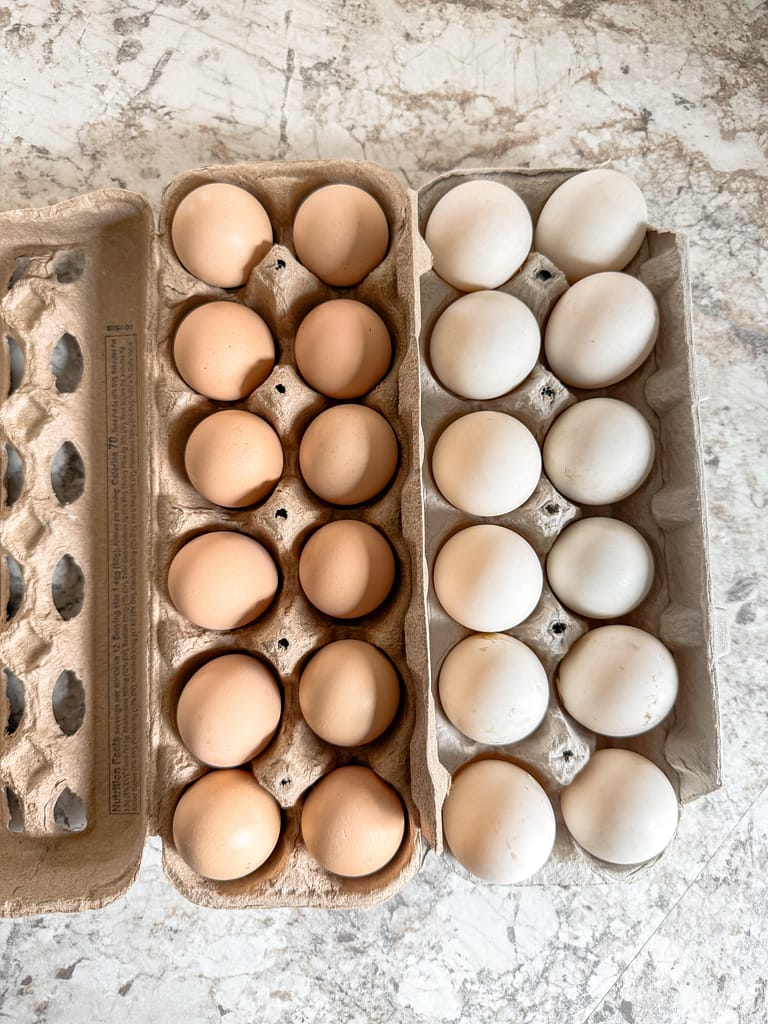
One of the first things we noticed about duck eggs was just how much larger and heavier they are compared to chicken eggs.
Even sitting side by side in the carton, the difference is obvious. Their yolks are larger too, which gives them that rich golden color that makes breakfast feel a little fancier.
Another thing we noticed right away was how much thicker and stronger the shells are. Cracking a duck egg almost feels like an experience of its own.
The very first duck egg we cracked took multiple hard whacks on the counter just to get a tiny crack started — that’s how tough their shells are compared to regular chicken eggs.
Duck eggs are so strong that I’ve accidentally dropped them in the grass before without even cracking them. Meanwhile, my chicken eggs seem to crack the second I barely bump them wrong.
Their shells are seriously impressive.
Another fun difference is that duck egg shells can come in different shades depending on the breed. Ours are usually a soft white or light cream color, and they always stand out in our egg basket next to the chicken eggs.
Duck eggs just feel a little extra special to collect and crack open, and it’s one of those small things that made us fall even more in love with having ducks in our backyard flock.

What Do Duck Eggs Taste Like Compared to Chicken Eggs?
When it comes to taste, I honestly think this one really depends on personal preference.
Some people absolutely swear duck eggs taste way better than chicken eggs, while others prefer the milder taste of regular chicken eggs.
For us personally, we don’t notice a huge difference — especially when baking. I’d say duck eggs have a slightly richer and “eggier” flavor, but it’s pretty subtle in most recipes.
One thing we do notice is that duck eggs definitely have a different smell compared to chicken eggs. It’s not bad, just different.
Some of our friends will only use duck eggs for baking because they love how rich and fluffy everything turns out, while others fry them up every morning for breakfast.
My brother even likes hard-boiling them, although he quickly learned they can be a little trickier to peel because of those extra-tough shells!
My husband and I both agree that while the taste difference isn’t super dramatic to us, duck eggs do feel richer overall, especially because of their larger yolks and creamier texture.
Are Duck Eggs Healthier Than Chicken Eggs?
While both duck eggs and chicken eggs are packed with nutrition, duck eggs tend to be a little richer in almost every category.
They’re typically larger, contain more protein, healthy fats, and calories, and are known for having extra nutrients like iron, Vitamin A, and Vitamin D.
Duck eggs also contain more omega-3s and cholesterol than regular chicken eggs, which is one reason they’re often considered more nutrient-dense overall.
Because of their richer nutritional profile, many people especially love duck eggs for high-protein lifestyles like keto or paleo diets.
Another big difference comes when baking.
Duck eggs contain more albumin (the egg white portion), which can help baked goods turn out fluffier, richer, and more moist.
That’s one of the reasons so many bakers swear by using duck eggs in cakes, pastries, and homemade breads.
My friend’s daughter loves to bake and has such a special talent and swears by the duck eggs I give her, and will not bake with chicken eggs anymore!
That said, chicken eggs may still be preferred for those following lower-fat or lower-cholesterol diets since they’re lighter overall.
One interesting thing we learned is that while duck eggs and chicken eggs contain similar allergens, some people who are sensitive to chicken eggs are actually able to tolerate duck eggs better — although that’s definitely something to test carefully and talk with your doctor about first.
Why Bakers Love Duck Eggs
One of the biggest things we kept hearing after getting ducks was how much bakers LOVE duck eggs… and honestly, now I understand why.
Because duck eggs are larger and have bigger yolks, they tend to make baked goods richer, fluffier, and extra soft.
Cakes rise beautifully, brownies turn out more fudgy and rich, and even simple homemade cookies seem to have a softer texture.
Duck eggs are also amazing in homemade pasta, custards, cheesecakes, and other cozy homemade recipes because they add such a creamy richness to everything.
If you love baking from scratch or making comfort foods at home, duck eggs might honestly become your secret ingredient.
I personally don’t notice a huge flavor difference once everything is baked, but I do notice the texture difference.
Everything just seems a little softer, fluffier, and richer overall.
It’s honestly one of my favorite unexpected benefits of having ducks, and now I completely understand why so many homesteaders and bakers prefer baking with duck eggs over chicken eggs.
Can You Substitute Duck Eggs for Chicken Eggs?
One thing we quickly learned is that duck eggs can pretty much be used just like chicken eggs in most recipes, which honestly made the transition way less intimidating than I expected.
Whether we’re making scrambled eggs for breakfast, frying eggs, or baking desserts, duck eggs work beautifully in almost everything.
Their yolks stay so rich and golden too, which makes homemade meals feel extra cozy and pretty.
Since duck eggs are larger than chicken eggs, one duck egg is usually equal to about one and a half chicken eggs.
We honestly don’t measure it out super perfectly every time, but it’s helpful to know if you’re baking or following a recipe closely.
One of my favorite things about cooking with duck eggs is how rich and filling they feel. Scrambled eggs turn out extra creamy, fried eggs have those big beautiful yolks, and baked goods just seem softer and fluffier overall.
If you’re new to raising ducks, don’t overthink cooking with their eggs too much — they’re surprisingly easy to use and have quickly become a normal part of cooking in our kitchen.

Shell Strength & Shelf Life
One of the biggest differences between duck eggs and chicken eggs is definitely the shell strength.
Duck eggs have a much thicker shell and stronger inner membrane, which helps protect the egg better and usually keeps them fresher longer too.
And trust me on this one — duck eggs may need a much stronger tap to crack.
We learned that very quickly after bringing our ducks home. I swear, sometimes it feels like I’m trying to crack open a tiny rock compared to our chicken eggs!
Honestly, their shells are so tough that I’ve accidentally dropped duck eggs in the grass before and they somehow survived without even cracking… meanwhile our chicken eggs seem to crack instantly if I barely bump them wrong.
The thicker shell and membrane also help give duck eggs a slightly longer shelf life than chicken eggs when stored properly, which is another little bonus we didn’t expect when starting our backyard flock journey.
Funny Things Nobody Tells You About Duck Eggs
One funny thing we quickly learned is that ducks do not lay eggs quite as predictably as our chickens do.
Our chickens usually have their favorite nesting box and consistently lay in the same spot every day. The ducks, however, seem to enjoy keeping us guessing.
At first, before we knew this, we genuinely thought our ducks had randomly stopped laying eggs for almost three days… only to eventually discover a completely buried nest hidden in the opposite corner of the coop with SIX eggs tucked inside it.
We were laughing so hard because, apparently, the ducks had just decided they wanted a new secret hiding spot and forgot to inform us.
Some days, both ducks lay in the same crate; other times, they each pick separate nesting spots, and then a week later, they suddenly decide an entirely different corner of the coop is their new favorite place. We’ve even found little hidden nests tucked into random corners before.
And unlike our chickens, the ducks also love burying their eggs down into the bedding, which honestly turns egg collecting into a little scavenger hunt every morning, trying to figure out where they hid them this time.
It’s chaotic, slightly confusing, and honestly, one of the funniest parts of having ducks in our backyard flock.


Are Ducks Better Egg Layers Than Chickens?
One thing we learned pretty quickly is that our ducks were way more consistent layers during the winter months compared to our chickens. Even during the cold Wisconsin winter, we could usually count on collecting two eggs almost every single day from our pair of ducks.
Our chickens, on the other hand, slowed down a lot once the daylight hours became shorter. Some days we’d get one chicken egg, and other times we’d go several days without getting any at all.
Chickens tend to rely much more heavily on daylight hours for egg production, especially during winter.
Meanwhile, our ducks just kept laying like it was no big deal. Honestly, it was one of the most unexpected benefits of having ducks in our backyard flock because fresh eggs during winter felt like such a treat.
For beginner homesteaders or anyone wanting more consistent eggs year-round, that was definitely a huge bonus we noticed with ducks versus chickens.
Duck Eggs vs Chicken Eggs: Which Is Better?
Honestly, I don’t necessarily think duck eggs are better than chicken eggs — I think it really just depends on your lifestyle, preferences, and what you plan to use them for.
Chicken eggs are definitely more common, have a milder flavor, and honestly feel a little more beginner-friendly overall. They’re what most of us grew up eating, so they’re familiar and easy to use in everyday cooking.
Duck eggs, on the other hand, feel a little richer and more special. They’re more filling, amazing for baking, and have those beautiful large golden yolks that make homemade meals feel extra cozy.
Their thicker shells and longer freshness are also huge perks we didn’t expect when we first started raising ducks.
For us personally, we love having both in our backyard flock because they each bring something different to the table.
Some mornings, we grab chicken eggs, other days we specifically reach for duck eggs if we’re baking or making a bigger breakfast.
Honestly, I love having both.
Chickens and ducks each bring something special to our little homestead, and learning the differences between their eggs has been one of the most fun and unexpected parts of raising them together.


https://shorturl.fm/zkll3
https://shorturl.fm/VpDKj
+1 totally agree with this, been on [url=https://deepai.org/profile/777bet]777bet[/url] for a bit and its solid
https://shorturl.fm/uvpYx
Experience the thrill of [url=https://ice-fishing-game-malaysia.com/]ice fishing rtp 97.10%[/url] and dive into an exciting world of Ice Fishing today!
Participants have the opportunity to use an Ice Fishing betting strategy, check out the Ice Fishing RTP of 97.10%, and choose between real money or free play modes.
https://shorturl.fm/xYRbP
https://shorturl.fm/PUZ2W
https://shorturl.fm/q95yb
yo ngl [url=https://ultrapanda.cc/]ultra panda 777[/url] hits different fr fr, like the layout is clean and everything loads fast tbh. Lowkey been on it for days now imo its solid no cap
https://shorturl.fm/pwZZ4
https://shorturl.fm/I67BR
https://shorturl.fm/PB8ok
https://shorturl.fm/I67BR
https://shorturl.fm/v4izY
https://shorturl.fm/GEcbe
https://shorturl.fm/GEcbe
https://shorturl.fm/GdKcA
It’s really interesting to see how duck eggs differ from chicken eggs in size, shell texture, and yolk richness. I never realized how much these differences can impact cooking and baking, and it makes me appreciate the variety backyard flocks can offer even more!
https://shorturl.fm/NNiRv
https://shorturl.fm/H3NJj
Hello i want share my experience with this platform, is very good because website is easy to use and the games are many and different styles available. The support team is answering questions when i need help. I think is good place for peoples who like to play. Here is link: [url=https://888-casino.cc/]888[/url]
https://shorturl.fm/DXRbv
https://shorturl.fm/ac30f
https://shorturl.fm/M4g3t
https://shorturl.fm/hwnEo
https://shorturl.fm/79wFK
https://shorturl.fm/7Ph4Q
https://shorturl.fm/9JRLn
Is very good site, I am using [url=https://9winz-online-casino.com/]9winz real or fake[/url] for three month now and experience is very nice, teh people there is friendly and fast, I reccommend to all my freind
https://shorturl.fm/sr03m
https://shorturl.fm/kZkYK
https://shorturl.fm/5zhQo
https://shorturl.fm/wctJv
https://shorturl.fm/xI4vf
https://shorturl.fm/ZDHYC
Si vas buscabas una alternativa exclusiva, quedarte en cabanas es una opcion que ha logrado bastante reconocimiento en este periodo. Ya sea un espacio burbuja en el sur de Espana, Cataluna o Madrid, estas cupulas ofrecen una posibilidad diferente de vincularse con la tranquilidad natural sin alejarse a las servicios. Hay variantes que van desde cupulas estrella polar en esta zona hasta bubble hotel en tierras catalanas o ademas burbujas junto a Madrid, excelentes para una experiencia de fin de semana.
Para los que esperan recorrer distintas zonas, puedes encontrar tambien espacios burbuja en sitios como esta zona, el sur andaluz o el entorno de Ronda, y espacio de camping burbuja en varios sitios de la peninsula. Si te importa revisar importes o opciones disponibles, te invito a revisar [url=https://hotelesburbuja.org]casa burbuja ronda[/url] , donde podras consultar material vigente y comentarios de visitantes. La oferta es grande y seguro descubriras el refugio en burbujas que mas acertadamente se acople a tu escapada.
Si llevas explorando una aventura distinta para tus mejores vacaciones perfectas, el lugar en burbujas es una eleccion que paulatinamente consigue mas exito. Desde alojamiento burbuja Andalucia hasta propuestas en burbuja Cataluna o bubble hotel en Madrid, estas aventuras presentan una via especial de reconectar con la naturaleza pura sin perder a la comodidad absoluta. Por ejemplo concreto, en burbuja Estrella Polar Murcia o burbujas granada logras experimentar de veladas bajo las estrellas resplandecientes con plena exclusividad y comodidad.
Para todos los que seleccionan destinos turisticos mas urbanos, las burbujas junto a Madrid o burbuja Malaga son una fantastica propuesta para escapadas romanticas de fin de semana. Tambien hay opciones interesantes como cabanas burbuja Cataluna o camping burbuja Alicante, ajustandose a diferentes perfiles y bolsillos. Si te atrae descubrir mas referencias y precios sobre los opciones de alojamiento en burbujas especiales, te aconsejo revisar a este sitio [url=https://hotelburbujaespana.org]alojamientos en burbujas[/url] , donde hallaras detalles relevante y indicaciones concretas.
https://shorturl.fm/XV2ib
Si estas explorando una propuesta unica, el hospedaje burbuja en multiples regiones de nuestro pais como la region andaluza, Cataluna y sus paisajes o la region madrilena es una eleccion cada vez mas buscada. Estas estructuras o capsulas burbuja dan una via unica de conectar con la entorno natural sin renunciar a las prestaciones, perfectas para descansos especiales o para alejarse del ritmo frenetico cotidiano.
En lugares como capsula estrella polar en tierras murcianas, hospedaje burbuja en Alicante o burbujas en las proximidades de la capital, puedes llegar a ver elecciones que se acomodan a tu presupuesto, ya sea un capsula en camping o una casa burbuja con panoramicas maravillosas. Para revisar multiples destinos y valores, te propongo consultar [url=https://hotelburbujaespana.top]alojamiento burbuja cataluna[/url] , donde hallaras recursos de ultima hora y analisis de las principales burbujas en el conjunto de Espana.
https://shorturl.fm/Bbi1f
https://shorturl.fm/6AYQL
https://shorturl.fm/tGxsu
https://shorturl.fm/tRzZV
Update: still going strong with this after 3 months now and im really happy with how its been working. way better than i expected when i first started, definately sticking with it. [url=https://ultrapanda.cc/]ultra panda mobi[/url]
https://shorturl.fm/qzsXp
Si quieres buscabas opciones acuaticas en la zona costera Tenerife, reservar jet skis es una fantastica opcion para recorrer la orilla y gozar del oceano de estilo entretenida y apasionante. En el area sur de Tenerife, particularmente en puntos como zonas como Costa Adeje, dispondras de desde alquileres por horas hasta aventuras organizadas en moto de agua que se adaptan a todos los niveles y presupuestos.
Para aquellos que necesitan comparar precios y alternativas, sugiero revisar tarifas de prestadores que disponen de servicios de alquiler en motos acuaticas en Tenerife, ofreciendo tambien opciones como recorrido en jet ski o contratacion de motos de agua en el area de Santa Cruz. Mas informacion y contenido sobre rutas y tarifas puedes consultar en este enlace: [url=https://motoaguatenerife.top]alquiler de motos de agua en tenerife sur[/url] . ?Genial para planear un dia increible y aprovechar del costa canaria!
https://shorturl.fm/7jCAI
https://shorturl.fm/ZxQQM
https://shorturl.fm/qadeA
+1 totally agree with this, been on [url=https://deepai.org/profile/777bet]777bet[/url] for a bit and its solid
https://shorturl.fm/TBUcJ
https://shorturl.fm/lMw0Q
https://shorturl.fm/Ft611
https://shorturl.fm/TNpTK
Si llevas buscando una propuesta singular de estadia, las cabanas burbuja en el territorio espanol son una posibilidad progresivamente conocida. Contemplando experiencias burbuja Andalucia e incluyendo complejos burbuja en Cataluna y la Comunidad de Madrid, estas estancias proporcionan una union incomparable con la vida silvestre sin abandonar a la comodidad maxima. Del mismo modo, enclaves como Bardenas Reales y la cupula Estrella Polar en Murcia se distinguen por su paisaje extraordinario y arquitectura sorprendente.
Para quienes deseen estan interesados en encontrar tipos de alojamiento burbuja en la zona de Madrid, Catalunya o Alicante, hay diversas propuestas como casas en burbuja, espacios camping burbuja y alojamientos rurales burbuja. Podras consultar amplia informacion detallada y costos sobre noches en burbuja en variadas regiones mas adelante: [url=https://dormirburbuja.top]burbujas barcelona[/url] . Definitivamente, es una eleccion ideal para escapar y deleitarse de vistas memorables.
Si deseas quieres aventuras en el mar en el puerto de Colon Tenerife, rentar motos marinas es una increible manera para disfrutar de la ribera y gozar del entorno marino de forma alegre y estimulante. En el sur de Tenerife, principalmente en enclaves como Los Gigantes o Costa Adeje, encontraras desde alquileres simples hasta recorridos en moto de agua que estan adaptadas a cualquier tipo de viajero.
Para quienes esperan consultar precios y alternativas, propongo ver servicios de operadores que proporcionan alquiler y excursiones en jet skis en Tenerife, entre los que hay modalidades como jet ski safari o renta de motos acuaticas en la capital de Tenerife. Mas informacion y referencias sobre rutas y tarifas estan disponibles aqui: [url=https://motoaguatenerife.top]extreme jet ski tenerife[/url] . ?Fantastico para disfrutar de un dia especial y explorar del costa canaria!
Si vas investigando deportes en el agua en Tenerife isla, mas aun en Puerto Colon o Los Gigantes Tenerife, pedir prestado motos de agua es una de las maneras mas apasionantes para disfrutar del litoral. Existen diversas propuestas de alquiler de jet ski en la zona sur con precios distintos, perfectas para todo tipo de principiantes como para quienes buscan tours mas extremas como los excursiones en moto de agua en la Costa Adeje.
Del mismo modo, si te interesa integrar la aventura con la observacion, las salidas en jetskis en la isla proporcionan imagenes asombrosas y la opcion de recorrer la linea costera de una manera vibrante y emocionante. Para recibir mas referencias sobre renta y rutas en jet ski en esta zona, echale un vistazo a este lugar [url=https://motosdeaguatenerife.top]excursion moto de agua tenerife[/url] , donde puedes comparar tarifas y acceder a las mas atractivas opciones.
https://shorturl.fm/bwIuN
+1 to this, been using them for a couple weeks now and zero complaints so far, the interface is clean and everything works smooth [url=https://9winz-online-casino.com/]9winz withdrawal[/url]
https://shorturl.fm/281Su
https://shorturl.fm/Csvbq
https://shorturl.fm/FoJNN
https://shorturl.fm/Si15r
https://shorturl.fm/xQ5hn
https://shorturl.fm/uqIvx
When you’re checking out various market providers, it’s wise looking at iqbroker service and its options like iq brokers or iq-broker to check which one aligns with your expectations most. Many clients suggest that using this vip service benefits offers some exclusive features worth reviewing.
Visitors can access detailed data and client experiences on [url=https://iqbrokerfaq.com]iq_broker[/url] where the network shares numerous things from iqbrokers to IQ_Broker trading experiences. It is always smart to accumulate as extensive info as you can before deciding on your selection.
If you’re exploring platforms for streaming video conversations, recognizing the multiple elements of livejasmin can be really useful. No matter if you’re interested in livejasmin_cams or the livejasmin_studio features, all of them offers unique options for audiences and hosts both. For a complete look and some useful tricks, head to [url=https://livejustcams.com]livejasmin_cams[/url] for more info.
Furthermore, livejasmin_video and livejasmin-stream functions support uninterrupted and superior delivery encounters that improve audience engagement. You should consider looking into these tools to take full advantage of your sessions on the channel and experience consistent live content.
https://shorturl.fm/pGuOc
https://shorturl.fm/wzMZR
https://shorturl.fm/3PsOo
https://shorturl.fm/wzMZR
https://shorturl.fm/Atm7C
https://shorturl.fm/KMBxa
https://shorturl.fm/WPlgt
https://shorturl.fm/7Iwyx
Been using [url=https://allbritish-onlinecasino.com/]allbrisishcassino[/url] for a couple weeks now and the game selection is defintely solid, though the withdrawel process could be a bit faster if im being honest but overall its pretty decent
https://shorturl.fm/kwPMC
https://shorturl.fm/0ojxF
https://shorturl.fm/yYZYW
https://shorturl.fm/AOo5X
https://shorturl.fm/i4FwW
https://shorturl.fm/8HBBG
https://shorturl.fm/mzZ5Z
https://shorturl.fm/gpnaC
https://shorturl.fm/tzE5z
https://shorturl.fm/kpYJD
https://shorturl.fm/1mB5G
https://shorturl.fm/XCEKx
https://shorturl.fm/Fpi2N
Si te encuentras buscando actividades nauticas en Puerto Colon Tenerife, contratar motos marinas es una maravillosa alternativa para descubrir la zona costera y vivir del paisaje marino de forma entretenida y emocionante. En el sur de Tenerife, principalmente en zonas como la zona de Los Gigantes, ofrecen desde opciones de alquiler sencillo hasta rutas guiadas en moto de agua que encajan a todo tipo de niveles.
Para quienes quieren comparar precios y opciones, te invito a revisar servicios de companias que ofrecen servicios de alquiler en vehiculos acuaticos en Tenerife, ofreciendo tambien opciones como recorrido en jet ski o contratacion de motos de agua en Santa Cruz. Todos los detalles y especificaciones sobre rutas y precios puedes consultar en este sitio: [url=https://motoaguatenerife.top]alquiler motos acuaticas tenerife[/url] . ?Estupendo para disfrutar de un dia diferente y gozar del entorno costero canario!
Si andas buscando actividades acuaticas en Tenerife, mas aun en la zona de Puerto Colon o Los Gigantes Tenerife, rentar jet ski es quizas la mejor alternativas mas divertidas para aprovechar del mar. Existen bastantes alternativas de contratacion de lanchas en Tenerife Sur con costos diferentes, excelentes tanto si eres personas nuevas como para los que desean excursiones mas intensas como los recorridos en moto de agua en esta hermosa costa.
Por otro lado, si te llama la atencion juntar la actividad con la visita, las tours en jetskis en las Canarias presentan vistas espectaculares y la opcion de visitar la orilla de una manera dinamica y placentera. Para obtener mas contenido sobre contratacion y aventuras en motos acuaticas en Tenerife, visita a este sitio [url=https://motosdeaguatenerife.top]alquilar moto de agua tenerife[/url] , donde es posible comparar posibilidades y obtener las mas economicas propuestas.
[b][url=https://promoazotmoscow.ru]баллоны веселящий газ купить москва[/url][/b]
Может быть полезным: https://promoazotmoscow.ru или [url=https://promoazotmoscow.ru]купить закись азота веселящий[/url]
[b][url=https://promoazotmoscow.ru]закись азота ингаляционный[/url][/b]
https://shorturl.fm/mkHAi
https://shorturl.fm/1FPjE
https://shorturl.fm/0GAIS
https://shorturl.fm/9SrJU
https://shorturl.fm/9mY3S
https://shorturl.fm/sDGTU